About IAMC Annual Meetings
The IAMC Annual Meeting is a scientific meeting intended for peer sharing and vetting, open to all registered participants. Researchers from organisations involved in integrated assessment modelling and their collaborators are warmly encouraged to attend. The meeting is designed to allow participants to freely share developments in methods, models and data.
The purpose of each meeting is to:
- Present and discuss the state of the art in integrated assessment modeling
- Review the status of ongoing community activities, including multi-model studies and Scientific Working Group activities
- Facilitate interaction with collaborating communities
- Evaluate and revisit the priorities of the integrated assessment community
With the occasion of each annual meeting, the IAMC Consortium may award presenters with recognition prizes for excellent work and research.
All participants must abide by the Code of Conduct for Participants in IAMC Annual Meetings. Recordings of any kind are prohibited without prior written consent of the presenter and the organisers.
Registration
Registration is now open for the 2026 IAMC Annual Meeting! Register via Oxford Abstracts, the same platform used for abstract submissions. In-person registration includes coffee breaks, lunches (17–19 November), and the opening reception (17 November). Online registration provides access to all streamed sessions.
Key Registration Deadlines
| Registration Opens | 24 June, 2026 |
| Early Registration Deadline – Early fees apply until this date | 4 September, 2026 |
| Presenting Authors Must Submit – Papers not registered by this date will not be included in the programme | 4 September, 2026 |
| In-Person Registration Closes – Or earlier if capacity is reached | 9 October, 2026 |
Registration Fees
In-Person
Includes lunches & opening reception
| Category | Early (until 4 Sep) | Late (from 5 Sep) |
|---|---|---|
| Low/middle income ① | € 120 | € 135 |
| Students ② | € 340 | € 405 |
| IAMC Members | € 400 | € 476 |
| Full fee | € 450 | € 540 |
① Residents and students in Low, Lower-Middle, and Upper-Middle Income economies as defined by the World Bank.
② Students must upload proof of student status upon registration.
Online
Access to all streamed sessions
| Category | Early (until 4 Sep) | Late (from 5 Sep) |
|---|---|---|
| Low/middle income ① | € 45 | € 54 |
| Students ② | € 140 | € 162 |
| IAMC Members | € 160 | € 191 |
| Full fee | € 180 | € 216 |
Cancellation & Refunds
In-person registration closes on 9 October 2026, or earlier if capacity is reached. No refunds will be given for cancellation requests received after 9 October 2026. Online registration does not close.
Visa Invitation Letters
Upon request, the IAMC Secretariat will issue invitation or visa support letters strictly to participants who have completed registration and paid in full. Once registered, send your request to iamc@iamconsortium.org including your full name, affiliation, full professional address, passport number, and purpose of visit. Allow ample time — visa applications can be lengthy and the Secretariat cannot expedite consulate processing times.
Venue, Travel & Accommodation
Venue & Address
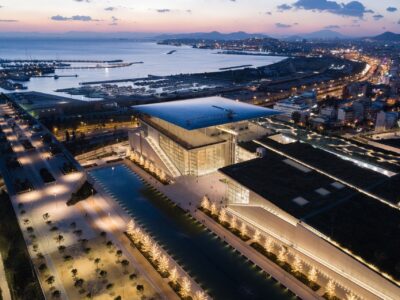
Eugenides Planetarium
387 Syngrou Avenue, Kallithea, Athens 17564
Open in Google Maps
Meeting Dates
17–19 November 2026
Format
In-person, with online participation for all sessions
Save the Date
Getting to the Eugenides Foundation
By Metro
Take Line 2 (Red) to Syngrou-Fix station, then board bus lines 550, B2 or trolley 10 to the Eugenides/Planetarium stop. Journey from city centre approx. 20 minutes.
By Car
The foundation is on Leoforos Syngrou (Syngrou Avenue), accessible via Leoforos Athinon, from Syntagma Square, or from the coastal road via Glyfada. Parking is available on site.
By Bus
- 550 Kifissia ↔ P.Faliro — Eugenides/Planetarium stop
- B2 Agios Kosmas ↔ Akadimia — Eugenides/Planetarium stop
- A2 Akadimia ↔ Voula via Amfitheas — Iasonos stop
- Trolley 10 Halandri ↔ Tzitzifies — Chrisaki stop
Presenter Guides
Guides for all presenters — oral sessions, on-site posters, and the Online Poster Festival. Full guide PDFs will be published after acceptance notifications.
Presentation format
- Presentations are held in-person at the Eugenides Planetarium
- Online attendance is available for all sessions
- Slides must be submitted in advance — deadline to be confirmed
- Presentation time: 15 minutes + 5 minutes Q&A (confirm with session chair)
- File format: PowerPoint (.pptx) or PDF recommended
- Aspect ratio: 16:9 widescreen
Copyright & recording
On the day
- Arrive at your session room at least 15 minutes before the session starts
- Introduce yourself to the session chair on arrival
- Bring your presentation on a USB stick as a backup
- A laptop and projector will be provided in each room
Instructions document
The oral presenter guide (PDF) will be published here and linked below when available.
Poster Format
- Poster sessions take place 17 and 18 November 2026 at the Eugenides Planetarium
- Poster size: A0 portrait (841 × 1189 mm) recommended
- Print and bring your poster — printing on-site is not available
- Mounting materials (pins/velcro) will be provided
- Posters should be set up in the morning of 17 November — exact timing to be confirmed
- Presenters are expected to stand by their poster during the session
Printing in Athens
Local printing option available. Participants who prefer not to travel with a printed poster will have the option to order printing in Athens. Details — including the print provider, file submission deadline, and collection arrangements — are included in the full presenter guidelines PDF.
Best Poster Award
The IAMC may award a Best Poster prize at the Annual Meeting. Details will be published with the full presenter guidelines.
Instructions Document
The on-site poster guide (PDF) will be published here when available.
Plenary sessions will be updated.
Keynote speakers will be announced once confirmed.
To be published once the programme is confirmed
The full parallel session list and programme details will appear here once confirmed by the Scientific Programme Committee.
Call for Abstracts
How to submit
Submission requirements
| Short abstract | Maximum 300 words |
| Long abstract | PDF · 600–1000 words · 1–3 figures · summary max. 100 words |
| File size | Maximum 10 MB per PDF |
| Multiple papers | Allowed — one talk per presenter is standard practice |
| Co-authored | Submit once per paper — only the submitting author receives notifications |
Abstract Topics
- NATIONAL – Assessment of national mitigation strategies (including non-state actors): This session will focus on assessing the effectiveness and consequences of climate policies at the national scale, including the implementation of nationally determined contributions, net-zero targets and mid-century strategies. The session can also cover the contribution of non-state actors
- INTERNATIONAL – International climate policy: This session focuses on the implementation of international climate action in the context of UNFCCC and complementary initiatives, including the use of flexibility instruments (e.g. Art. 6) and the analysis of climate clubs. It also invites submissions on the relationship between current geopolitical developments and international climate action, including considerations related to trade and security.
- DEEP – Analysis of deep mitigation strategies: This session will focus on (the consequences of) mitigation scenarios aimed at stringent mitigation targets consistent with the Paris Agreement.
- OVERSHOOT – Strategies to decrease warming after an earlier peak: This session will look in possible overshoot strategies, including the possible climate impacts of overshoot.
- CDR – Carbon dioxide removal: This session looks into promising carbon dioxide removal techniques (CCU, BECCS, DACS, and others) and the implications of using these.
- DEMAND – Efficiency, lifestyle change, sufficiency and regrowth: This session will focus on modelling energy demand and the role of efficiency improvement. Attention will also be paid to the role of behavioral change, degrowth and its representation in IAM models.
- SECTORAL – Climate mitigation in different sectors: This session focuses on the Integrated assessment of pathways to carbon neutrality in the transport, building and industry sectors. Please note that there is a separate section on CE and materials.
- MATERIALS – Critical minerals, bulk materials and circular economy: This session will look into the material demand of baseline and transformation scenarios, as well as means to mitigate demand for materials.
- ENERGY – Energy supply-sector analysis (including fossil fuels): The session will investigate the advanced analysis of electricity and hydrogen production (including system integration) and the use of these energy carriers in end-use sectors.
- LAND&BIO – Land use and biodiversity: This session will focus on strategies related to land-related climate and sustainable development problems, including biodiversity conservation, ecological services and land degradation.
- FEASIBILITY – Feasibility and transition analysis: This session will focus on the representation of socio-technical transitions in IAM research (including institutional change) and issues related to feasibility. Specifically, it will address how to combine insights from social-technical transition research, insights on institutional change and governance and IAM modelling. One of the relevant topics here can be dealing with different forms of feasibility (technical, economic, and social or political), enablers of effective climate policy and barriers.
- ECONOMY – Economic analysis and climate finance: This session focuses on the economic aspects of mitigation and adaptation strategies and risks associated with climate impacts. This also includes climate finance. But also integrated approaches to mitigation, adaptation, and impacts together.
- MARKETS -Labour and financial market frictions: This session explores methods to represent transition bottlenecks, capital constraints, and employment dynamics, and assesses policy instruments that mitigate delays, manage distributional impacts to keep decarbonisation pathways open.
- POLICY – Policy instruments and policy analysis: This session will focus on the representation of policies in IAMs and the analysis of the impact of different policy instruments.
- IMPACTS – Impacts of climate change (including representation of the climate system): This session will focus on modelling climate impacts in integrated assessment models. Special attention will be paid to the representation of adaptation in IAMs. Impacts of climate change, such as those on agriculture, energy systems or wider. The session will also look into the representation of the climate system itself (including small climate models and emulators).
- WELLBEING – Human well being and health: This session will focus on the representation of human well-being and health in IAMs.
- SUSTAINABLE – Sustainable development: This session will focus on the assessment of Sustainable Development Strategies, including analysis of the energy-water-land nexus.
- JUSTICE – Climate justice (including equity and distributional impacts): This session will investigate distributional aspects of mitigation strategies (both at the international and national scale) and the development of just transition strategies. The support for mitigation strategies often depends on the (perceived) fairness of strategies. In this session, we will look into the distributional and fairness aspects of mitigation strategies related to IAM analysis.
- DEVELOPMENT – Development strategies: This section looks into the relationships between (a focus on) development strategies in relation to climate policy (mitigation/adaptation), including synergies and trade-offs; we also welcome submissions related to demographic trends
- METHODS – Methodological advances in IAM research (including use of AI, open science and stakeholder interaction): This session will specifically look at various methodological issues related to IAMs, including open science and uncertainty analysis. This may also involve model validation, programming languages presentation tools, model solvers, representation of complex policies and model evaluation.
- SCENARIOS– SSPs and other scenarios: This session is looking for updates and extensions of the SSP scenarios in various areas and across scales, such as developing national and regional scenarios and their association with appropriate SSP domains. At the same time other new scenarios and focus on the representation of shocks are also welcome.
- DIGITALISATION – Implications of digitalisation and AI for climate policy: This session looks into the impact of digitalization and AI on future energy, resource use and emissions.
Travel Grants

The RE-CONNECT Project is a 4-year-project funded by the European Commission DG Climate Action project that aims to support a range of countries on issues related to climate change modelling and transparency. RE-CONNECT will cover travel and financial assistance for selected participants attending in-person and will also support virtual participation.
What’s included?
• Travel and financial support for selected in-person attendees
• Virtual presentation/attendance options for broader accessibility
• Exclusive networking opportunities with global climate experts
• A chance to contribute to high-impact discussions on climate transparency
Please note, sponsored participants will be asked to provide a post-event mission report detailing the key insights they gained from attending the conference.
Who can apply?
This funding removes financial barriers for modelers who may otherwise struggle to attend specialized conferences. Applications for support will be reviewed, and decisions will be communicated a week before the early registration deadline of September 4, 2026. Some applicants requesting in-person funding may be offered virtual support instead.
How to apply
If you would like to apply for support, please complete and submit the online application form by Friday 17 July 2026. Places are limited, so be sure to provide detailed responses to strengthen your application.